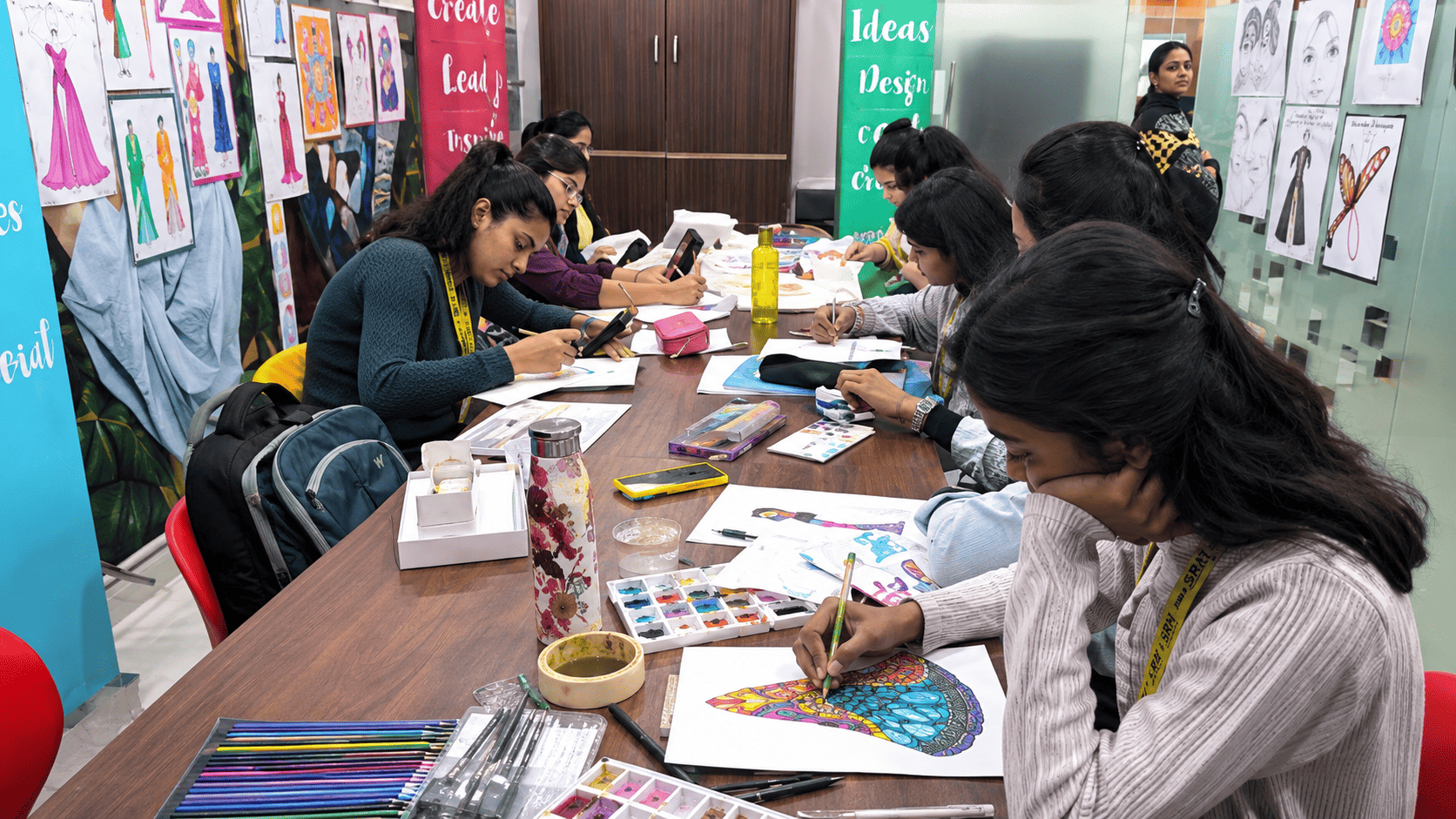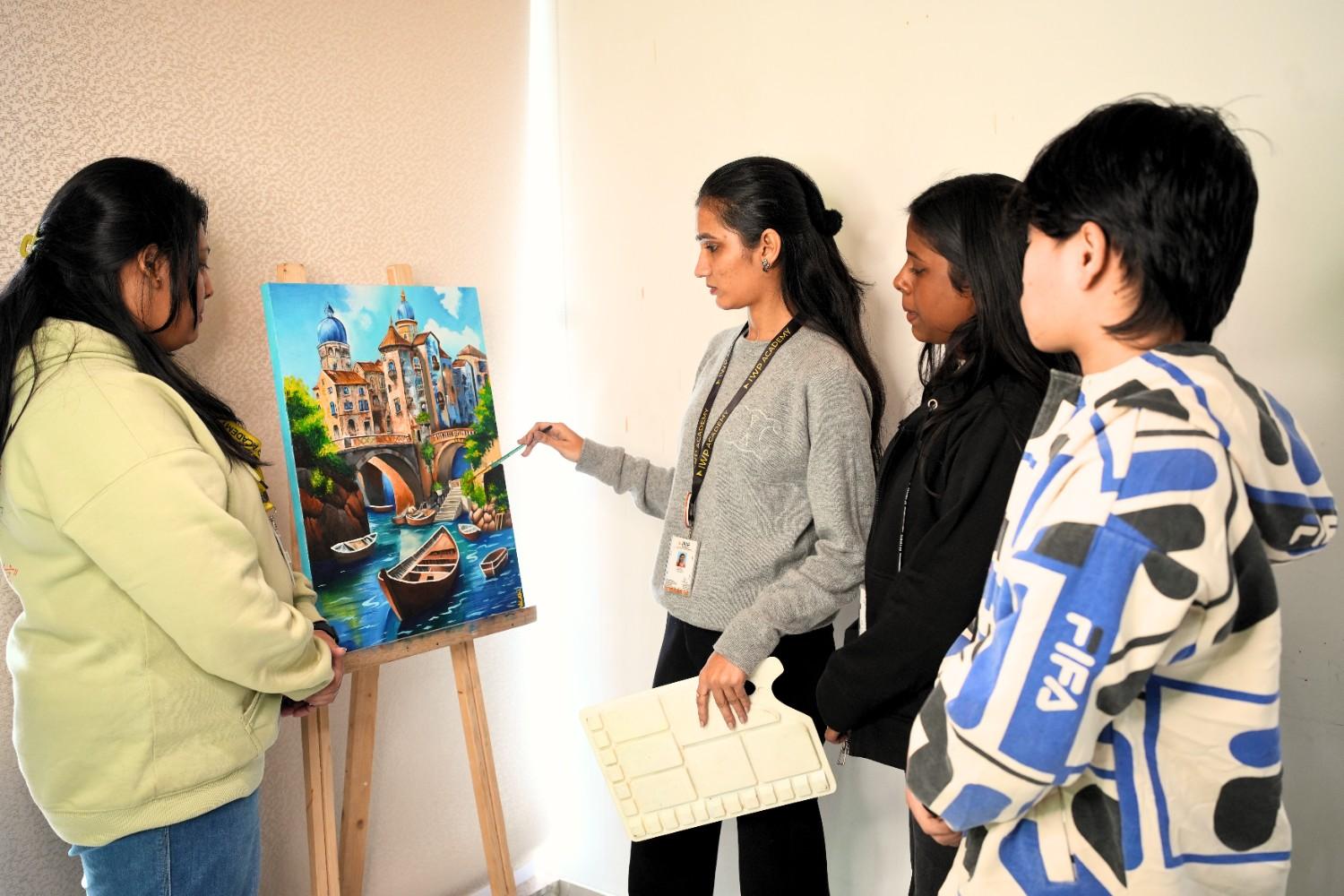
Introduction: That Feeling After 12th Is Real
You just finished your 12th board exams. Everyone around you is talking about engineering, medicine, or MBA. Your parents are asking, "So what next?" Your relatives are throwing in their suggestions at every family gathering. And somewhere in the middle of all this noise, you are sitting quietly, sketchbook in hand, wondering if your love for drawing, painting, and creating things can ever become a real career. If this sounds familiar, you are not alone.
Thousands of students feel this exact confusion every year. They love art. They are naturally creative. But they do not know how to turn that creativity into a profession. The good news? You absolutely can. And Fine Arts after 12th is the path that makes it possible.
This blog is for every student who has ever been told that art is just a hobby. Keep reading, because your career choice might be closer to your passion than you think.
What Is Fine Arts, Exactly? Before anything else, let us understand what Fine Arts actually means, because many students confuse it with craft work or just drawing.
Fine Arts is a broad field of visual and creative expression that includes:
Drawing and Sketching the foundation of all visual art
Painting using watercolors, acrylics, oils, and more
Illustration creating visual stories through images
Printmaking a traditional yet timeless art form
Sculpture working with 3D forms and materials
Visual Communication using art to send messages and ideas
A fine arts course teaches you how to observe the world differently, express ideas visually, and communicate through your creative work. It is not just about making pretty pictures. It is about developing a unique artistic voice and using that voice professionally.
Why Choose Fine Arts After 12th? This is the question that matters most. Let us be honest and straightforward about why Fine Arts is a genuinely great choice for creative students.
-
You Get to Do What You Love Every Day Most people spend years in careers they do not care about. When you choose Fine Arts, your work becomes your passion. Imagine waking up every morning knowing you will spend the day painting, designing, or creating. That is not just a career. That is a life well lived.
-
Creative Careers Are Growing Fast The world needs creative professionals more than ever. From digital media and advertising to animation, gaming, fashion, and publishing, every industry is looking for skilled artists. The demand for art and design career professionals is growing steadily both in India and globally.
-
Multiple Career Paths to Explore A fine arts course does not lock you into one job. It opens up many doors. Whether you want to become an illustrator, a graphic designer, an art teacher, a freelancer, or even run your own studio someday, fine arts gives you the foundation.
-
You Build Real, Visible Skills Unlike many academic courses where learning happens only on paper, fine arts training is hands on. You work with actual materials, build a real portfolio, and develop skills that people can see and evaluate. Your work speaks for you.
Skills You Learn in a Fine Arts Course Joining fine arts classes is not just about drawing better. You develop a complete set of creative and professional skills, including:
Sketching and Drawing Techniques from basic lines to complex compositions
Color Theory and Painting understanding how colors work together and express emotion
Design Thinking learning to solve visual problems creatively
Visual Storytelling how to communicate ideas through images
Observation and Attention to Detail seeing the world more deeply than most people
Portfolio Development building a professional body of work that showcases your talent
Digital Art Basics many courses now include digital tools alongside traditional techniques
These skills are not just useful in art. They make you better at thinking creatively in any situation, which is a quality every employer values today.
Career Opportunities in Fine Arts
Let us talk about what you can actually do after completing your fine arts course. There are more creative career options than most people realize.
Artist Many fine arts graduates go on to become practicing artists, creating original work and selling it through galleries, online platforms, and exhibitions. With social media, independent artists today have a massive global audience.
Illustrator Books, magazines, websites, apps, and children's content all need illustrators. This is one of the most popular and well paying careers for fine arts graduates who love storytelling through images.
Graphic Designer With some additional training in design tools, fine arts graduates make excellent graphic designers. This art and design career has strong demand and good earning potential in agencies, studios, and as freelancers.
Art Teacher If you love working with people and shaping young minds, becoming an art teacher is a deeply fulfilling path. Schools, colleges, and private fine arts classes are always looking for qualified and passionate teachers.
Freelance Artist The freelance economy has created massive opportunities for creative professionals. Many fine arts graduates build successful freelance careers doing commissions, brand illustrations, custom artwork, and more, all from the comfort of their own studio.
Other Creative Career Options Animation, art direction, mural artist, art therapist, content creator, UI/UX design, fashion illustration, and more. The career in fine arts is only limited by your imagination.
Why Professional Training Matters You might be thinking, "I already know how to draw. Why do I need formal training?" That is a fair question. And here is the honest answer: self-taught skill is great, but professional training at a recognized fine arts institute takes your ability to an entirely different level.
Here is what structured fine arts classes give you that self-study often cannot:
Expert Guidance: Learning from experienced faculty who have worked in the industry means you avoid common mistakes, learn advanced techniques faster, and get feedback that actually improves your work.
Practical Learning Environment: A good fine arts institute provides the right tools, materials, and studio environment to help you practice seriously. You cannot replicate that at home.
Portfolio Building: A quality institute guides you in building a strong, professional portfolio. Your portfolio is your resume in the art world, and it needs to be impressive.
Real World Exposure: Projects, workshops, exhibitions, and interactions with working artists give you a taste of the professional world before you even graduate.
A Recognized Qualification: Employers and clients take you more seriously when you have formal training from a credible fine arts institute. It signals commitment and skill.
Who Can Join Fine Arts Courses After 12th? One of the best things about choosing Fine Arts after 12th is how inclusive it is as a field. You do not need to be a genius or have years of experience to start. Fine arts courses after 12th are open to:
Students from any stream: Arts, Science, or Commerce
Beginners who are just starting to explore their creative side
Students with a natural interest in drawing, painting, or visual expression
Art lovers who want to turn their hobby into a profession
Anyone with a willingness to learn and a passion for creativity
If you love art and are willing to put in the effort to grow, you belong in a fine arts course.
Conclusion: Your Creative Career Starts With One Decision
Here is the truth: talent alone does not build a career. Direction does. And choosing Fine Arts after 12th gives your creativity the direction, structure, and professional grounding it needs to become something real.
You do not have to follow the crowd. You do not have to settle for a career that does not excite you. If your heart belongs to art, then art belongs in your future.
Take the first step. Find a good fine arts institute. Enroll in fine arts classes. Build your portfolio. And start creating the career you have always imagined.
The world needs creative professionals. And that creative professional could be you.
Frequently Asked Questions (FAQs)
-
Can I choose Fine Arts after 12th? Yes, absolutely. Fine Arts courses after 12th are available for students from all streams, whether you studied Arts, Science, or Commerce. All you need is a passion for creativity and a willingness to learn.
-
Is Fine Arts a good career option? Yes, it is. The demand for creative professionals is growing rapidly across industries like advertising, media, gaming, publishing, and education. A career in fine arts can be both creatively fulfilling and financially rewarding.
-
What jobs can I get after a Fine Arts course? After completing your fine arts course, you can work as an artist, illustrator, graphic designer, art teacher, freelance creator, mural artist, animator, or even start your own art studio. The creative career options are wide and growing.
-
Do I need drawing skills to join Fine Arts? You do not need to be an expert before joining. Many fine arts classes start from the basics, so beginners are very welcome. What matters more is your interest in art and your willingness to practice and grow.
-
What is the salary after a Fine Arts course? Salaries vary based on your specialization and experience. Entry level roles in graphic design or illustration can start at around Rs. 15,000 to Rs. 25,000 per month, while experienced artists, designers, and freelancers can earn significantly more. Many successful fine arts professionals also build strong independent income through commissions and freelance projects.
-
How long is a Fine Arts course after 12th? Most undergraduate fine arts programs are three to four years long. There are also shorter diploma and certificate courses available at various fine arts institutes that can range from six months to two years.
Follow your creativity. Your art is not just a passion. It is your future.