Still Trying to Find the Right Career Path?
You know the drill. Every year, a wave of students leaves school or college, all asking themselves the same thing: "What career should I go for?" Some chase engineering, others jump into commerce, and more than a few just feel lost. If you’re searching for a career that’s stable, respected, and genuinely skill-driven with opportunities in both government and private jobs maybe it’s time to look at something unexpected: stenography.
Don’t roll your eyes! In a world obsessed with tech jargon and trendy titles, stenography keeps quietly doing its thing. It’s reliable, it’s in demand, and honestly, it offers a career foundation that lasts. Let’s dig in and see how stenography isn’t just a course it’s the launchpad for a solid, rewarding future.
What’s Stenography, Anyway?
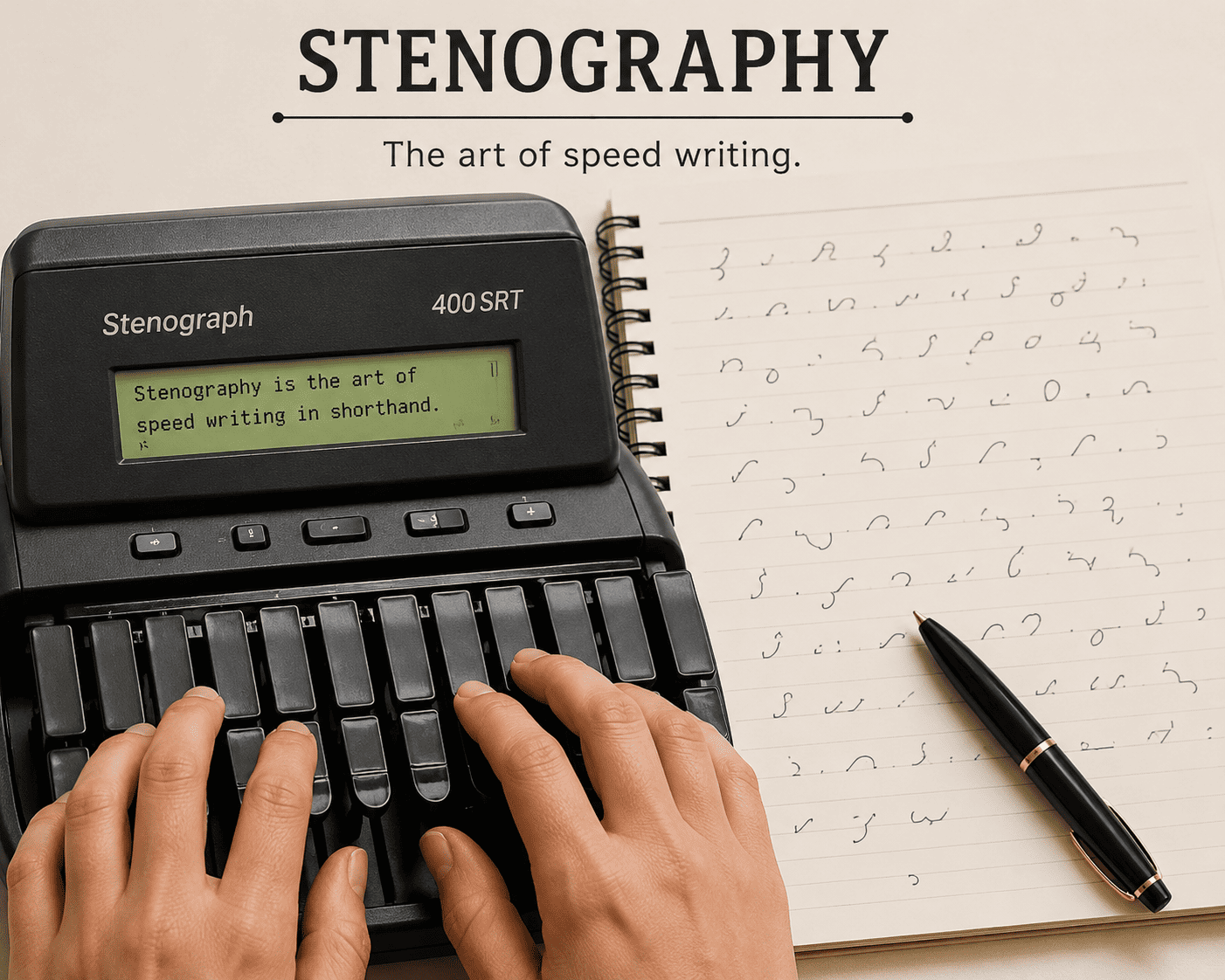
Let’s keep it simple. Stenography is all about writing fast really fast using shorthand symbols, and then typing out those notes with speed and accuracy. If you get good at it, you become a stenographer.
Stenographers have one main job: capturing spoken words in real time, whether that’s in a courtroom, a meeting, or even an office. Their notes get turned into official documents, and they're pretty much the backbone of formal communication wherever they're needed.
At its core, stenography has two major pieces:
Shorthand writing: A system using symbols and abbreviations to keep up with spoken words. Typing: Quick, accurate typing to turn those notes into readable text.
Put those together and you get someone who’s not just useful they’re vital in any office setting.
Why Stenography Still Matters in 2025
People love calling stenography “old school,” but that’s just not true. The demand is real, and here’s why:
Government Jobs Galore Government bodies from ministries to state offices hire stenographers all the time. Take the SSC Stenographer Exam, for instance. Clear it, and you could land a Grade C or D post with solid pay, stable benefits, and job security. For lots of folks, that’s reason enough to give stenography a try.
Courts and Legal Sector Every word in court needs to be put on record. Arguments, judgments, testimonies the lot. Court stenographers and transcriptionists keep the legal world running and are always needed across courts and legal firms.
Corporate Offices and Admin Big companies, multinationals, media groups, and even ministries rely on stenographers as PAs or executive secretaries. These jobs offer not just good pay, but also a professional environment and room to grow.
Steady Income and Perks If you land a government stenography job, expect a regular paycheck, pension, allowances, and job security stuff that’s tough to find in today’s gig economy.
What You Learn in a Stenography Course
Sign up for a professional course and you get way more than just shorthand and typing. You emerge as a versatile office pro.
Shorthand (English & Hindi): Learn established systems like Pitman, and soon you’ll write 80–140 words a minute. Typing Speed & Accuracy: Aim for 40 to 60 words a minute with barely any mistakes something any employer will value. Focus & Concentration: Sharp attention becomes second nature. That’s a huge plus no matter where you work. Professional Communication: Draft official letters, reports, and handle correspondence confidently. Time Management: Deadlines and accuracy are part of daily life, and you get the discipline to match.
How Stenography Boosts Your Career
Let’s get down to specifics how does stenography actually help you build a lasting career?
-
You Develop Discipline Fast Stenography is all about consistent practice. That habit sticks, making you more organized and dependable when you start working.
-
It’s a Shortcut to Government Jobs Few skills offer such a direct path. Pass your exams and you could land a secure government post—complete with status and benefits.
-
Real Career Growth You don’t stay stuck at entry level. With experience, stenographers move up to senior roles, become personal secretaries, and even reach administrative positions.
-
You Become an Office Essential Top executives rely on skilled stenographers. That puts you in a trusted role, smack in the middle of important decisions.
-
You’re Always Employable Even if you shift careers later, the skills you earn fast typing, precision, communication, focus make you valuable in any industry.
Career Choices After Stenography
Once you finish your course, a bunch of new doors open. Here’s where you might find yourself:
Government Stenographer (SSC Grade C/D): Central or State Government Court Stenographer: Judiciary Personal Assistant (PA): Corporate / Government Office Secretary: Private / Public Sector Administrative Executive: MNCs / NGOs Transcriptionist: Legal, Medical, Media Legislative Reporter: Parliament / Assemblies
The pay and benefits depend on your role, but plenty of folks who started as stenographers end up as senior officers, personal secretaries, or even independent consultants.
Why Students Should Give Stenography a Shot
Here's the thing stenography can get you into the workforce way faster than the usual routes. While some people spend years earning degrees, a stenography course can be done in 6 to 12 months. You’ll be job-ready, and you’ll learn skills employers actually want no pointless theory.
Plus, the work environments are professional. Think clean offices, organized spaces, dignified colleagues. Whether you end up in a ministry, a court, or a boardroom, it’s a respectable gig.
Who Can Join a Stenography Course?
This is the best part it’s wide open. No fancy degrees needed. If you’ve finished Class 12 (any stream), you’re good to go. Graduates, total beginners, job seekers, even working professionals looking to switch, all are welcome. If you’re ready to practice and hungry for a career, this skill could be yours.
Conclusion: It Only Takes One Decision
You don’t need years of study or impossible exams to start a respected career. Sometimes, all it takes is deciding to learn a practical skill one that’s in demand and actually matters. Stenography has opened doors for generations and keeps doing so. Whether you want a government job, a corporate role, or something in the legal sector, this skill gives you the tools and discipline to make your own success.
Why wait? Take the leap. Join a stenography course, start learning, and build the future you want. Seriously, your career could be just a shorthand symbol away.
FAQs
-
What is stenography? Stenography is the art of recording spoken words quickly with shorthand symbols plus fast typing. It’s used in offices, courts, companies, and media to document important talks and proceedings.
-
Is stenography a good career in India? Yes, absolutely. Stenography is stable and respected. It gets you into government jobs (like through SSC exams) and opens up private sector roles think PA, court staff, office secretary. The mix of job security and professional growth is tough to beat.
-
How long does a stenography course take? Most courses last between 6 months and a year, with some diploma programs stretching to 2 years. It’s way faster than earning a regular degree and gets you working sooner.
-
What kind of jobs can I get after learning stenography? Stenographers can work as government officials (SSC Grade C/D), court staff, personal assistants, office secretaries, transcriptionists, admins, or legislative reporters. Options exist in both government and private sectors.
-
What skills do I need for stenography? You need good shorthand writing, speedy typing (usually 40 to 60 words per minute), sharp focus, accuracy, clear communication, and solid time management. These can all be learned with proper training at a good institute.